You’re probably at this article because you love gardening and you would like to learn to start seeds on a budget. We are drawn to vegetable gardening for many reasons, but a common thread is resourcefulness, which diffuses into frugality. Many gardeners are at their core, thrifty gardeners, growing high-quality produce at a fraction of the cost of the grocery store makes everything taste better. I’m happy to be your guide on this journey if you’re looking to get into gardening without the cost. Not spending money is my second favourite pastime, behind gardening.
Growing Medium
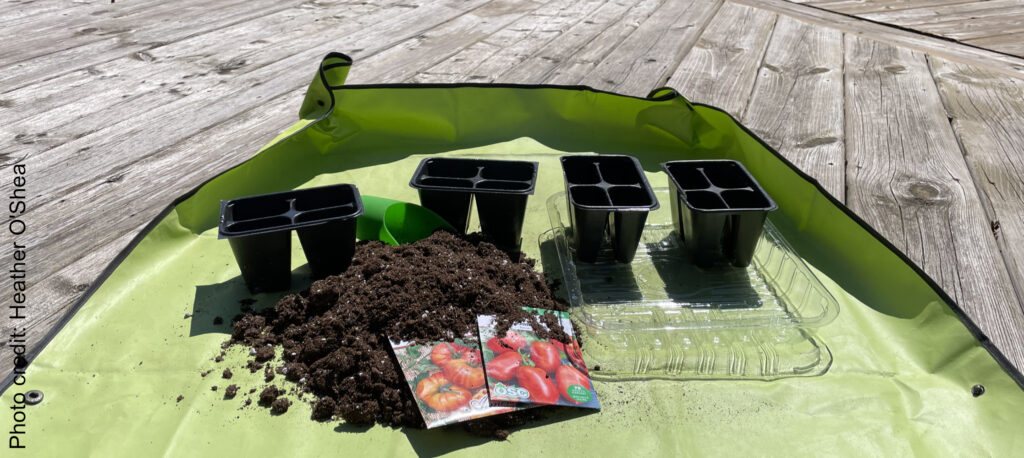
Let’s start our journey as you start seeds (see our article on seed starting here). Paring away the frills, you need just seeds, a growth medium (also called potting mix), a container to hold it and light. Growth medium is soilless and is the exclusive choice for seed starting because it is light, doesn’t compact and is pathogen free. Pathogen free is important. Lots of soil fungi like to stick their tentacles into the tender shoots and roots of plants, causing damping off. But a growth medium costs more than the soil that’s already in the ground. I have a few dirty secrets for you, that are grounded in science and frugalism.
- Use the same potting mix for two years for some plants (use less valuable seeds that are abundant and free because you saved it yourself). Shake the winter-dried medium out of the roots of planters from last year, then use that soil to start seeds. Gasps, can I do that? Damping off is caused by fungi that thrive in cool, wet conditions, and they are present in the potting mix because it spent a year outside. I carefully monitor the soil moisture (a little on the dry side with low humidity) during germination and keep the soil warm from below.
- Use pasteurized soil (Here’s how to make it) and mix that with standard potting mix 1:1.You can use this for planters when a lightweight growth medium is needed but are less concerned about damping off. Pasteurization inactivates the fungi that cause damping off. The main concern becomes drainage since you need the soil to drain freely to prevent overgrowth of remaining microorganisms and to keep the young plants in the best environment. Sandy soil works best so drainage isn’t an issue. This does not work as well with clay soil. How?I put damp soil in a roasting pan covered with aluminum foil and bake it at 200 C with the temperature probe in the soil. Once the soil reaches 180 C, I hold it at that temperature for 30 minutes. Once it comes out of the oven, I let it de-gas for several days, with periodic stirring to hopefully get rid of any compounds made during heating that might be toxic to plants. Why not experiment by using it alongside your regular potting mix and some spare seeds to see how it works for yourself!
How is this grounded in science? The damping off pathogens are in garden soil and compost, but not potting mix. Depending on the situation, I plant lettuce seed, tomatoes, kale, and cucumbers either in potting mix or in the garden, where the damping off pathogens are. Since the garden plants thrive if the soil is warm and not too wet, I know that it is possible to germinate seeds in the presence of these pathogens, it just means a bit of extra attention. I don’t do this for all seedlings. Precious hybrid seeds get only the best: new potting mix, sterilized tools and washed hands to ensure they are nowhere near the damping off fungi.
A warm, sunny window or provide bottom heat to your germinating seedlings will also help to keep the damping off at bay.
What to plant into
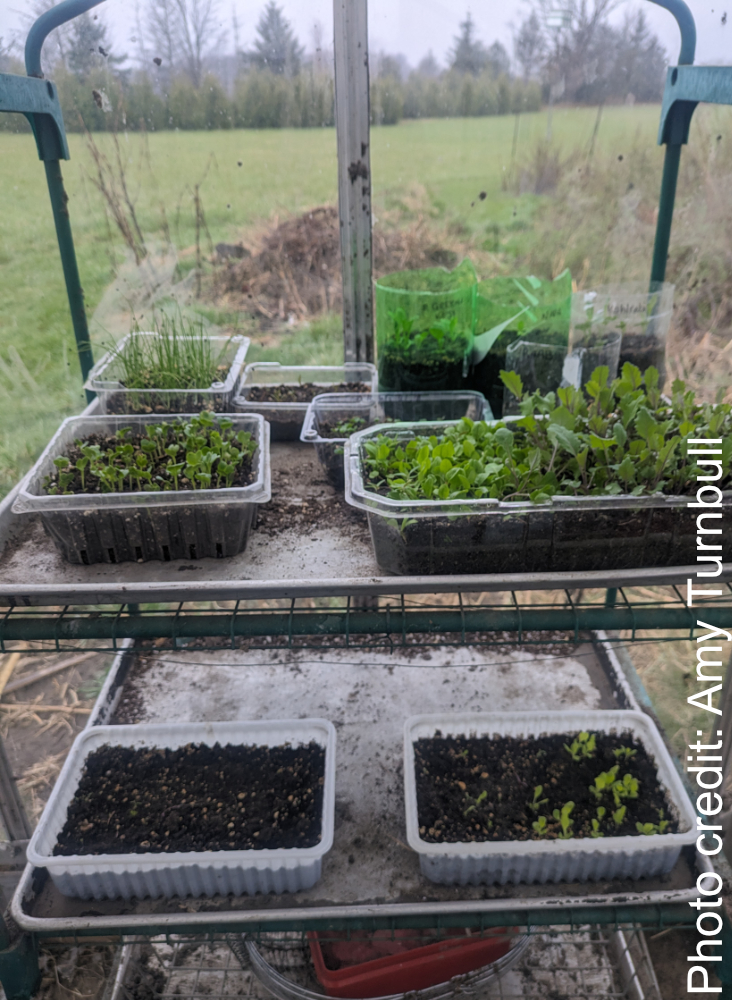
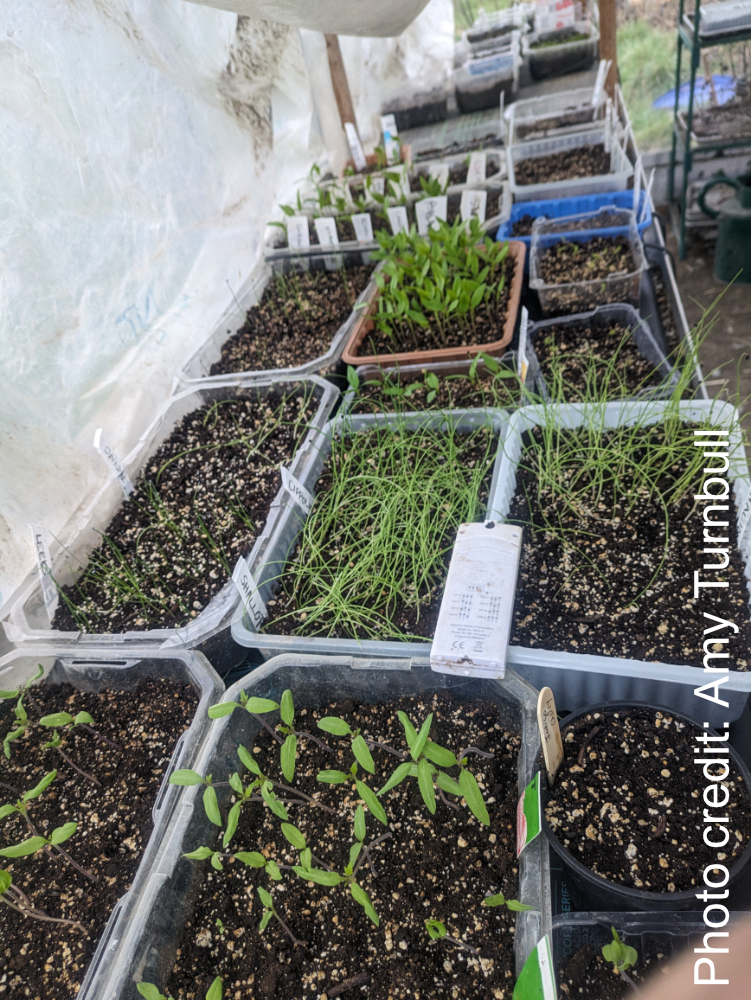
Now that you’ve got some soil, you need a container to put it in. If you’ve been using actual plant pots, sit down, because this will be big. You know all the plastic that your food comes in? If you have a pointy tool like and awl or bodkin, you can poke holes in the bottom of those containers to make plant pots of various shapes and sizes! Yogurt containers (of any size), mayonnaise, peanut butter, trays that hold tomatoes and other fresh produce, anything. Before you know it, you’ll be making food choices at the grocery store based on the use of the container as a pot.
Time to plant
Where did the seed come from? For optimal savings, you collected that seed yourself, and it is free. If you aren’t already saving your own seed, please have a look at Seeds of Diversity. They have a great guide to seed saving; we also have a great Seed saving basics article. It is rewarding in the seasonal rhythm it creates, as well as rewarding in the free seeds that you get! I must note, I do still cling to a few hybrids for economical reasons. We do have some devastating and predictable diseases of vegetable crops that only modern hybrids with disease resistance can counter. The seeds are costly, but they offer a harvest in years with heavy disease pressure. For instance, late blight in tomatoes comes on weather systems (out of my control!) and destroys tomato plants in days. I plant mostly open pollinated saved seed, but also always plant one variety of a hybrid with disease resistance to the late blight pathogen. In years when we get the disease early, this is the only variety that I harvest. There are other plant diseases that buying seed can help improve your harvest.
For example:
- Downy mildew in cucumbers
- Powdery mildew in winter squashes
- Downy mildew in spinach
That’s not an exhaustive list, just examples of diseases that necessitate a hybrid to ensure a harvest in unpredictable seasons.
Time to plant outside
For anyone planting into the ground and not a container, raised beds are popular. They also look pretty costly with the supplies required for the structure and soil. What if you grew plants that were tall and scaffolded them up to your level. This works really well if getting down to the ground is an issue. Think pole beans instead of bush, training cucumbers up trellises rather than scrambling across the ground, indeterminate tomatoes instead of determinate. The trellis material need not be pricey. Think outside the box: balusters from torn-down decks, all kinds of old fencing material and old hockey sticks as examples. Embracing the eclectic aesthetic helps here.
Tools of the trade
Need some garden tools? Garage sales are a great place to get them at low cost. No, they won’t be shiny, but you can bring them back to life with some attention. Sharpening is a must, and some abrading with a wire brush to remove rust will bring new life back to the tools.
I hope you feel empowered to try something less costly in your garden this year. Gardening is thousands of years old and the tools required are equally ancient.
References
Penn State University: Damping off with pasteurization instructions. Accessed 15 March 2026. https://extension.psu.edu/damping-off
Penn State University: Damping off https://extension.psu.edu/safeguard-your-seedlings-from-damping-off
About The Author: Amy Turnbull
Scientist, researcher and professor at Fanshawe College. Avid grower of edibles in her home garden.
More posts by Amy Turnbull