

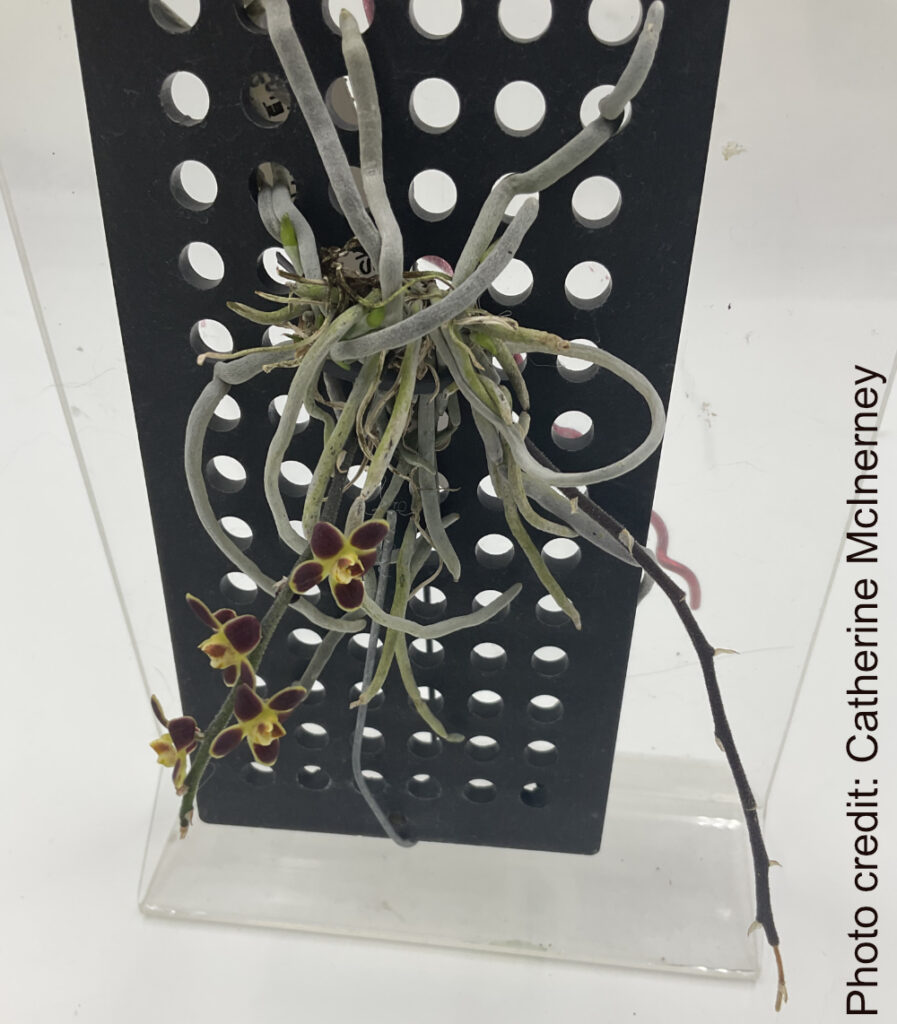
Orchids do many things differently than other plants. As a result, their leaves are not as important to them as their roots.
Orchid seeds contain no nutrients for the plant. Orchids use the assistance of mycorrhizal fungi found in the soil to generate energy they need for germination. They receive energy from this relationship for the rest of their lives. Some orchids may then be able to dispense entirely with photosynthesis from their leaves.
Some orchids would not be able to benefit from photosynthesis because they live in an area of the rainforest with little sunlight such as the forest floor (2).
Orchids also do not greatly benefit from photosynthesis because they produce relatively few leaves per plant. For example, a mature Phalaenopsis may only have 4-6 leaves. Sympodial orchids that spread horizontally by rhizome only ever have two leaves per bulb.
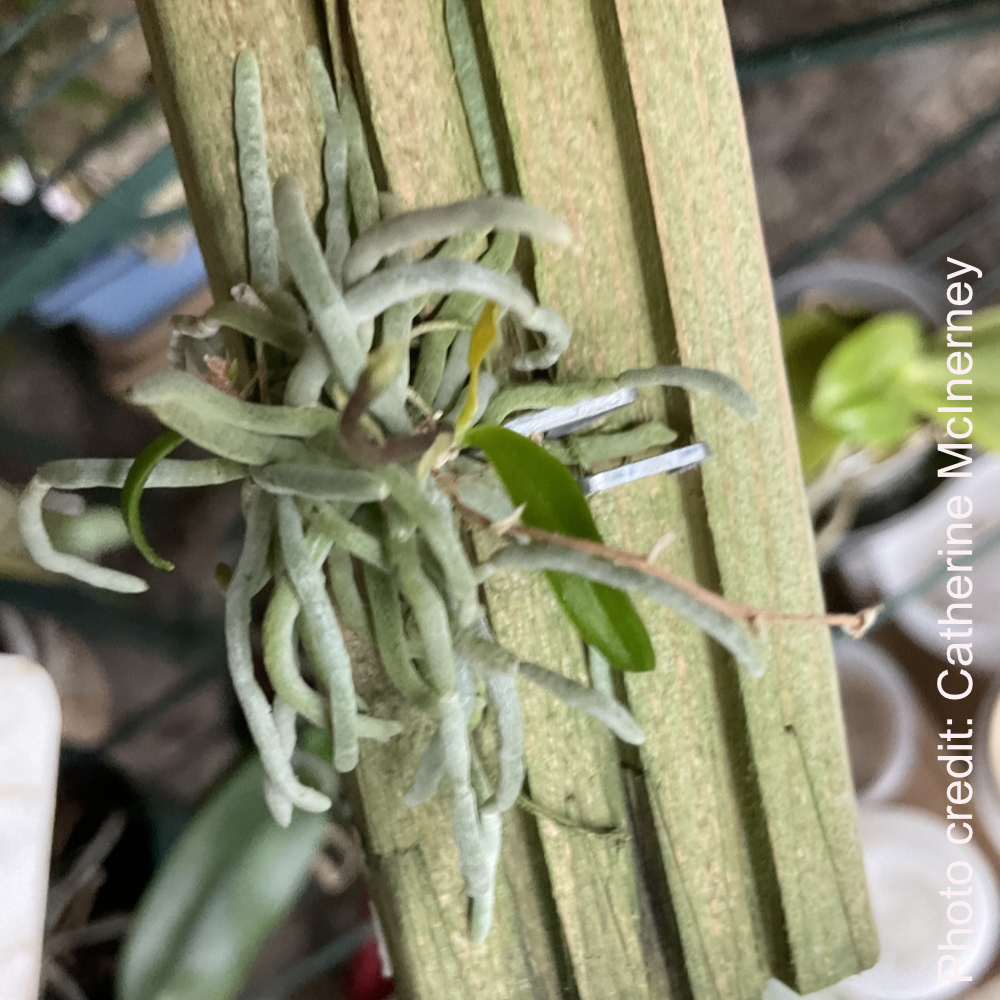
Sun? Na, not needed
Orchid leaves have low capacity to absorb and process light (3). The structure of an orchid leaf is not effective at this way of using sunlight due to factors such as leaf thickness, small pores in the leaves. Orchid leaves are also small in size relative to the plant, so they are not big enough to produce a lot of energy.
Many orchid species remain leafless for several months every year (Dendrobiums, Lycaste, Clowesia etc.) and only put out leaves briefly before flowering. Most orchids drop their older leaves after flowering. All of these factors make orchids less likely to use leaves for photosynthesis.
Photosynthesis in roots?
Orchids have many features ideal for development of root photosynthesis. Orchids and produce long fibrous root networks. Since they nest in trees they have roots continuously exposed to water, light, and air so they can absorb resources through their roots.
All orchid species may do some root photosynthesis. The velumen (covering) on orchid roots is green when wet. This indicates the presence of light and energy gathering chloroplasts in the root. This is why it may be beneficial to pot orchids in clear pots.
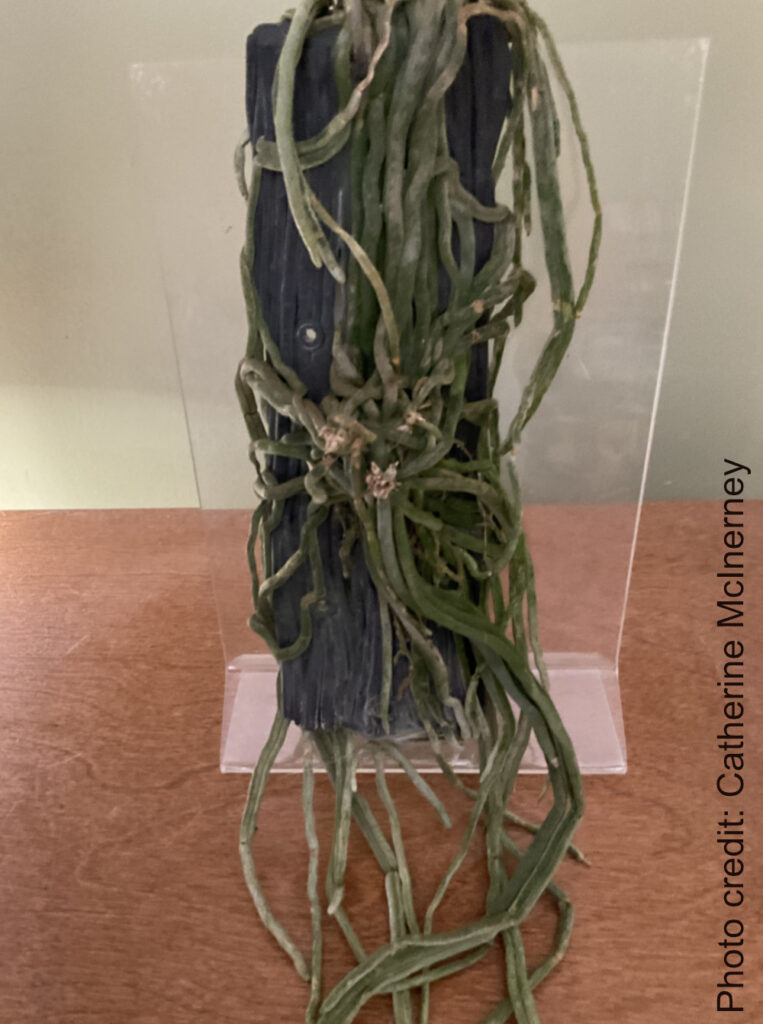
Totally leafless orchid species may have evolved to prevent their leaves from scorching, or for camouflage from plant eating species. There are about 250 species of leafless orchids including Chiloschista, Dendrophylax, Gastroidia, Praecoxanthus, Taenophyllum. These plants clearly photosynthesize through their roots (1).
Orchids have evolved so that they are able to tap into photosynthesis using roots and/or leaves to provide energy. We do not know which of these adaptations (leaflessness, root photosynthesis) will be a successful survival strategy as the climate changes and the amount and quality of sunlight available to each species varies.
References
1.Phys.org.Leaf-like photosynthesis discovered in the roots of a leafless orchid. 1 March 2023.
2.Teegan. Mushroom diet: the orchids who give up photosynthesis. Plants and Pipettes.15 Mar 2019.
3..Zhang, Shibao. Physiological diversity of orchids. Plant Diversity. 25 June 2018.
About The Author: Catherine McInerney
More posts by Catherine McInerney